

The Maestro Formation System
A sequential musicianship framework built to develop independent, literate, and expressive musicians.
We don't just teach music. We form musicians.
Not Built in a Lab. Forged Across a Lifetime.
The Maestro Formation System wasn't created in a university office, a research lab, or a single classroom. It was forged across a lifetime of musical experience — and refined into a framework that addresses a real problem Phil observed in his own program and couldn't find an existing solution for.
The system draws from multiple streams of deep musical formation:
Classical training — a Bachelor of Arts in Music with a piano concentration and a Master of Music in Music Education, providing the theoretical foundation and pedagogical framework the system is built on.
Orff pedagogy — developed and practiced over more than a decade as an elementary music educator beginning in 2004, where experience-first, kinesthetic learning became the cornerstone of Phil's teaching philosophy.
Gospel, R&B, and Jazz musicianship — not studied from a distance, but lived. Phil is an active Gospel musician, R&B vocalist, and Jazz performer and vocalist. The cultural and stylistic vocabulary embedded in the system — the blues sequences, pentatonic structures, and contemporary tonal language — come from authentic musical fluency, not academic observation.
The African-American sacred music tradition — spanning spirituals, Gospel, and the historic worship culture of the Black church — is not background influence in this system. It is a foundational stream that shapes both the stylistic vocabulary and the pedagogical philosophy of the Maestro Formation System from the ground up. The cultural tonal language your students already carry is not a supplement to formal literacy. It is the bridge to it.
Secondary choral education — since joining Woodcreek Middle School in Humble ISD in 2017, Phil applied, tested, and refined every element of the system with real students in a real program under real contest conditions.
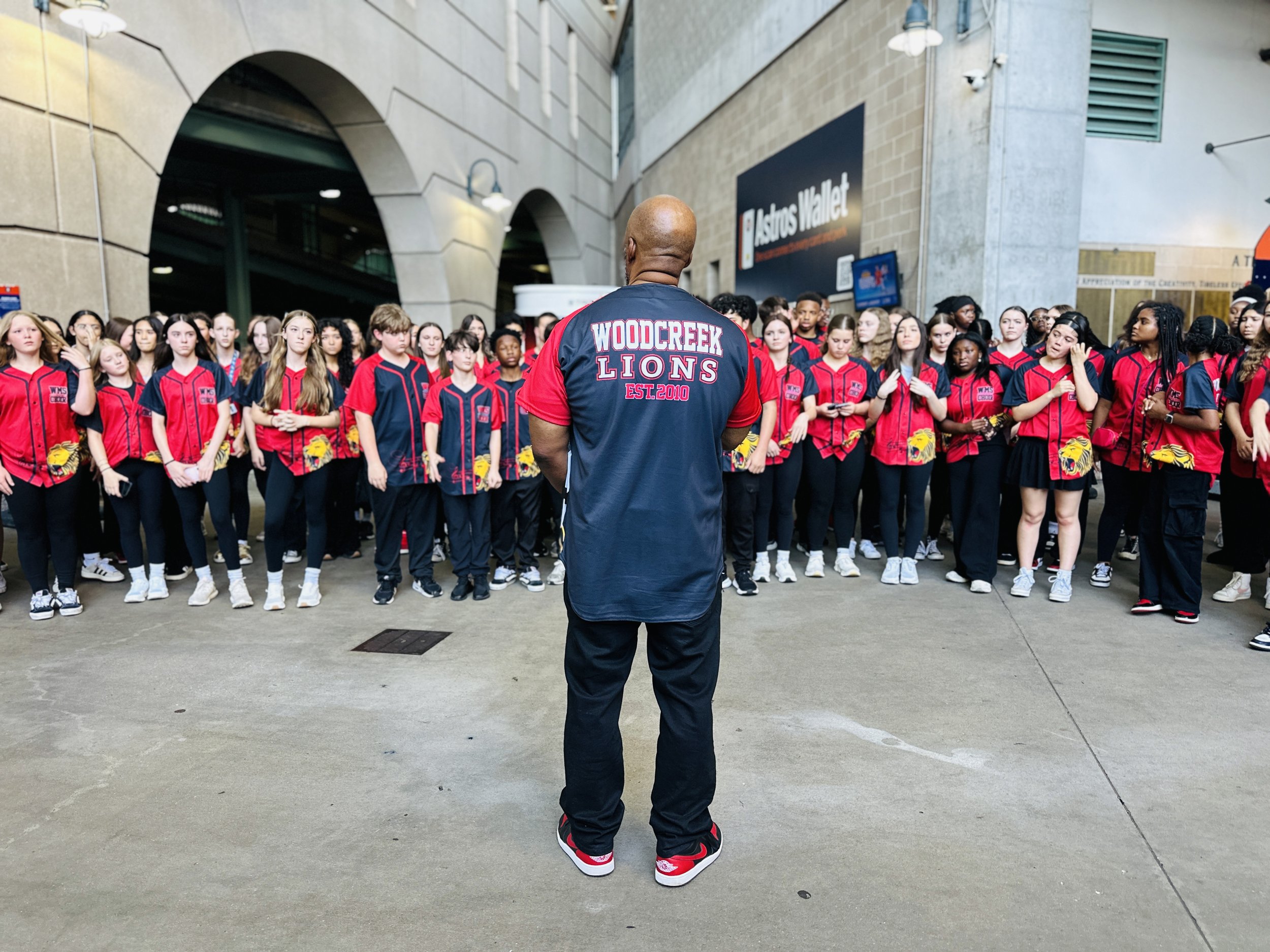
The Maestro Formation System exists because none of these worlds alone was sufficient — and because Phil recognized that students needed a framework that honored all of them simultaneously. Classical literacy. Cultural authenticity. Kinesthetic internalization. Sequential development. All unified into one coherent methodology.
The system is built on one foundational conviction: students internalize musical relationships procedurally before they can analyze them theoretically. That means sound before sight. Movement before abstraction. Experience before explanation.
Rather than teaching students to react to the page, the Maestro Formation System trains them to anticipate it — developing rhythm, tonality, harmony, and stylistic fluency as instinctive responses rather than intellectual tasks.
The result is an ensemble that doesn't just perform music. They own it.
Five Levels of Musical Formation
Each level builds on the last, creating a sequential pathway from foundational literacy to complete musical independence.
Level 1 — Rhythmic Formation Developing internal pulse, subdivision awareness, rhythmic precision, and ensemble alignment through movement-based sequencing. Rhythm is not a concept to be analyzed — it is a physical experience to be owned.
Level 2 — Tonal Formation Building tonal memory, audiation, interval recognition, and melodic fluency through sequential tonal expansion. Students hear tonal relationships before they ever see them on the page.
Level 3 — Harmonic Formation Teaching functional harmony, voice leading, inversion fluency, and independent harmonic hearing. Harmony becomes a habit — something students navigate, not just sit inside.
Level 4 — Chromatic & Modal Formation Developing flexible tonal hearing, chromatic literacy, modal fluency, and stylistic vocabulary. This level connects formal musicianship with the tonal world students already live in — including pentatonic, blues, and contemporary structures.
Level 5 — Musical & Leadership Formation Developing complete musicians through literacy ownership, stylistic authenticity, collaborative leadership, and artistic confidence. The goal is not the performance. The performance is evidence. The musician is the goal.
What the System Produces
These results came from a public middle school in Humble, Texas — not a select magnet program, not a nationally prominent university ensemble. Real students. Real constraints. A system built for sustainability, not just contest season.
20 UIL Sweepstakes Awards
20 Combined Consecutive Sweepstakes Ratings Across Three Ensembles Adagio Tenor-Bass Choir (9 Consecutive) • Bel Canto Varsity Treble (7 Consecutive) • Dolce Non-Varsity Treble (4 Consecutive)
200 TMEA Region 33 All-Region Choir Placements Since 2017
12 former WMS Choir students earned Texas All-State Choir placement — 17 total placements, including 4 multi-year members, the first freshman All-State singer in Summercreek HS history (2026), and the first All-State choir member in both C.E. King HS and Sheldon ISD history.
2024 Festival Champions Conroe Choral Festival — Cub Choir (6th Grade Beginners)
Carnegie Hall DCINY Invitational Performance—2019 & 2024
These numbers aren't the goal — they're the evidence. The goal is always the musician standing behind them.
Bring the System to Your Program
The Maestro Formation System is available through clinics, workshops, and professional development engagements for choral programs, music educators, and educational organizations.
Whether you're preparing for UIL, building long-term ensemble culture, or developing your own pedagogical framework, this system gives you tools you can implement immediately — and build on for years.